What Is the Best Folding Pallet for Global Shipping?

Time:2026-09-19 Author:Ethan
0%

Choosing the best Folding Pallet for global shipping is not simply a question of price. It requires practical testing across ports, warehouses, trucks, and return routes. A pallet that performs well in a dry European warehouse may struggle beside a humid Asian dock. Load capacity, folded height, deck stability, nesting ratio, and forklift access all matter. So does cleaning. Tiny design details can create large shipping costs.

Packaging engineer and reusable-transport specialist Dr. Mark White expresses the principle clearly: “A pallet is not just a platform; it is part of the supply chain.” That view deserves attention. A Folding Pallet affects container utilization, handling speed, product protection, and reverse logistics. When folded, it should occupy minimal space without becoming difficult to open. When loaded, it should remain stable under real working conditions, not only in a product brochure.

No single model wins every route. That is the uncomfortable truth. Exporters should compare plastic grade, hinge strength, safe working load, surface grip, repair options, and supplier support. They should also check destination-country requirements with qualified logistics and customs professionals. Rules can differ by cargo, material, and transport mode.

Measure the whole journey.

A careful trial shipment is often more revealing than a confident specification sheet. We should also admit one weakness: returnable pallets can lose their environmental advantage when recovery distances become excessive. The best Folding Pallet is therefore the one that balances durability, folded volume, safety, and total lifecycle cost for a specific global shipping network.
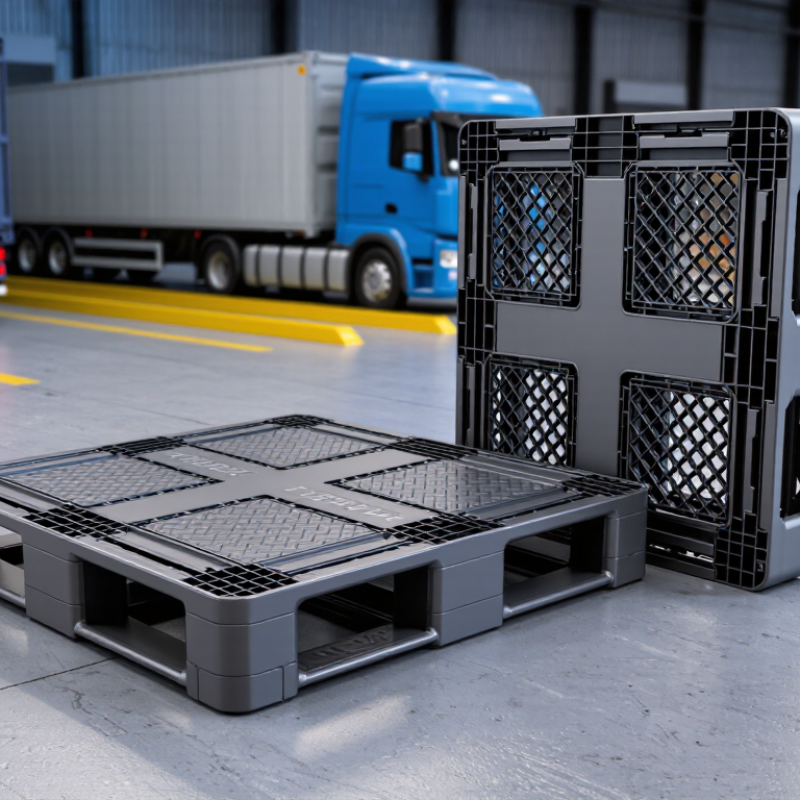
What Is the Best Folding Pallet for Global Shipping?

What Is a Folding Pallet and Why Is It Used in Global Shipping?

A folding pallet is a reusable load platform with hinged or removable parts. When empty, its legs fold inward, reducing storage space and return-shipping volume. When opened, it supports cartons, drums, or crates during warehouse handling and international transport. The design is simple. The savings can be significant. In practical warehouse trials, folded pallets often stack tightly beside loading bays, leaving more room for active inventory.

Global shipping creates several handling challenges. Cargo may move by truck, vessel, rail, and forklift before reaching its destination. A stable pallet helps protect goods from uneven floors, sudden braking, and repeated lifting. Folding models can also reduce empty-return costs, especially when freight moves between distribution centers. Plastic construction resists moisture and is easier to clean than untreated timber. Still, the material, dimensions, and load rating must match the cargo. A 1,200-by-1,000-millimeter pallet may suit one network but waste space in another container.

The best folding pallet is not always the lightest one. Check its dynamic and static load ratings, locking strength, deck design, and forklift entry points. Test it with the real product, including corner weights and straps. Small weaknesses become expensive at sea. Destination requirements also deserve careful review, including packaging records, labeling, and sanitation rules. I would not rely on a supplier’s data sheet alone. Measurements can change under cold temperatures, repeated folding, or uneven loading. A controlled trial may reveal an inconvenient truth: the most compact pallet is sometimes less stable.

What Is the Best Folding Pallet for Global Shipping?

A folding pallet is a reusable pallet designed to collapse or nest when empty, reducing return-shipping volume and storage space. The best choice for global shipping should match the cargo footprint, container layout, handling system, and destination-market requirements.

The chart compares three widely used pallet footprints. Dimensions are shown in millimeters; 48 × 40 inches equals approximately 1219 × 1016 mm. ISO 6780 identifies standardized pallet dimensions, while regional pallet systems may require different folding-pallet footprints.

Key Features to Compare When Choosing a Folding Pallet

What Is the Best Folding Pallet for Global Shipping?

Key Features to Compare When Choosing a Folding Pallet

A reliable folding pallet should match your cargo, route, and handling equipment. Start with load capacity, including both static and dynamic loads. A pallet may hold heavy goods while stored, yet fail during forklift movement. Check the deck size against cartons, containers, and warehouse racking. Even a small overhang can cause damage during transit.

Material matters in changing climates. Plastic pallets resist moisture, pests, and repeated washing, while reinforced designs can support demanding freight. Compare the folded height and stacking ratio carefully. A compact pallet can reduce return-shipping volume, but thin components may wear sooner. Inspect hinges, feet, and deck surfaces after repeated cycles. My first comparison focused too much on weight. That was a mistake. Durability and repair options often matter more over several shipping seasons.

Tips: Request independent load-test results and handling instructions. Confirm compatibility with forklifts, pallet jacks, and automated systems. Check whether the pallet meets destination requirements for dimensions, hygiene, and material treatment. Ask about traceability, replacement parts, and end-of-life recycling. Test one sample under realistic conditions before placing a large order. Include cold storage, rain exposure, uneven floors, and manual handling in the trial. A clean-looking pallet is not always a dependable one. Human inspection still catches problems that specifications miss.

How Pallet Materials Affect Durability, Weight, and Reusability

What Is the Best Folding Pallet for Global Shipping?

How Pallet Materials Affect Durability, Weight, and Reusability

Material choice changes how a folding pallet performs from the loading dock to the destination warehouse. Plastic pallets resist moisture, insects, and repeated washing. Their surfaces stay consistent, which helps automated handling and stable stacking. However, cold temperatures can make some plastics brittle. A hard impact near a hinge may cause hidden cracking.

Wood pallets usually offer strong load support and simple repairs. They can also be more affordable for one-way shipments. Yet wood absorbs moisture, adds weight, and may vary in size. Treatment and documentation can also affect international acceptance. These details should be checked before booking freight, not after a container reaches the port.

Weight matters in every shipment. A lighter plastic pallet can reduce transport costs and improve manual handling. Folding designs create another advantage by reducing empty-return volume. Ten collapsed pallets may occupy far less space than ten rigid ones. This supports reuse between distribution centers. Still, reuse is not automatic. Hinges, deck boards, and locking points need inspection after each cycle. A pallet that looks clean may already be unsafe.

Testing with the actual load is essential. Measure compression strength, fork-entry damage, moisture exposure, and stacking stability. Short trials are useful. They are not perfect. Real routes include vibration, rough handling, and unexpected weather. A material that performs well in a dry warehouse may disappoint beside a wet container yard. The best folding pallet is therefore the one whose material matches the load, route, climate, and recovery plan.

Which Folding Pallet Design Best Fits Different Shipping Needs?

What Is the Best Folding Pallet for Global Shipping?

The best folding pallet depends on the route, load, and handling equipment, not its folded height alone. For frequent one-way export, a lightweight plastic pallet with secure hinges can reduce return volume and simplify cleaning. It suits boxed goods, humid ports, and mixed warehouse conditions. Check static and dynamic load ratings under real stacking patterns. A capacity claim may assume evenly distributed weight.

For closed-loop shipping, a heavier reusable design is often better. Reinforced corners, replaceable feet, and smooth entry points support repeated forklift handling. If trucks or containers are space-limited, choose a pallet that nests tightly when folded. Automated warehouses need consistent dimensions and openings that match conveyor rails. Cold-chain users should test brittleness at low temperatures. Test it cold.

Details matter. Very light pallets can flex under uneven loads. Hinges may trap dirt and complicate inspection. A practical trial should include wet floors, rough transfers, and several folding cycles. Record damage, stack height, cleaning time, and repair needs. Do not ignore worker handling; a compact pallet may still feel awkward during lifting. The right design is sometimes the less impressive one. Recheck supplier test data against recognized transport and phytosanitary requirements for each destination.

How to Evaluate Costs, Regulations, and International Compatibility

The best folding pallet for global shipping is not always the lightest option. It must balance purchase price, freight cost, durability, and destination requirements. A practical evaluation starts with the full shipping cycle. Measure the pallet’s folded height, loaded weight, and return volume. A pallet that saves warehouse space may still become expensive when empty units travel long distances.

Regulations can change the calculation. Wooden pallets may require approved treatment and visible compliance markings in some markets. Plastic and metal pallets often reduce pest-related concerns, but customs officers may still request material details. Check the import rules for every destination before ordering. Keep technical documents, load ratings, and material declarations available. Small paperwork gaps can delay an entire shipment.

International compatibility also depends on handling equipment. Confirm that forklifts, pallet jacks, and warehouse racks can safely accept the pallet’s entry points and dimensions. Test one loaded unit on a rough route, including loading, stacking, unloading, and storage. Watch for bent edges, unstable feet, or folding joints that collect dirt. I used to focus mainly on unit price. That was too narrow. A cheaper pallet can create higher labor, repair, and return costs. The best choice is the one that performs consistently across borders, even when conditions are less than perfect.

FAQS

What is a folding pallet?

A folding pallet is a reusable platform with hinged or removable parts. Its legs fold inward when empty. Opened, it supports cartons, drums, or crates during transport.

Why are folding pallets useful in global shipping?

They reduce empty storage space and return-shipping volume. Folded pallets can stack tightly beside loading bays. This leaves more room for active inventory.

How do folding pallets protect cargo?

They create a stable base during truck, vessel, rail, and forklift handling. A strong pallet helps manage uneven floors and sudden braking. Repeated lifting can still expose weak points.

What load information should buyers check?

Check both static and dynamic load ratings. A pallet may hold heavy goods while stored but fail during forklift movement. Include corner weights and straps during testing.

Does pallet size affect shipping efficiency?

Yes. The deck should fit cartons, containers, and warehouse racks. Even slight overhang can cause damage. A 1,200-by-1,000-millimeter pallet may waste container space in some networks.

Which materials suit changing climates?

Plastic construction resists moisture, pests, and repeated washing. Reinforced designs may support heavier freight. Cold temperatures can change measurements and material behavior.

What features should be inspected before purchase?

Inspect hinges, feet, deck surfaces, locking strength, and forklift entry points. Confirm compatibility with pallet jacks and automated systems. Small defects become costly at sea.

Is the lightest folding pallet always the best choice?

No. Weight matters, but durability and repair options may matter more. My first comparison focused too much on weight. That was a mistake.

How should a folding pallet be tested?

Test one sample with the real product before ordering many units. Include rain, cold storage, uneven floors, and manual handling. A clean-looking pallet is not always dependable.

What records and destination requirements matter?

Review dimensions, labeling, packaging records, hygiene rules, and material-treatment requirements. Ask about traceability, replacement parts, and recycling. Supplier data alone may not reveal every problem.

Conclusion

A Folding Pallet is a collapsible load platform designed to support, protect, and efficiently move goods through international supply chains. When empty, it can be folded to reduce storage volume and return-shipping costs, making it especially useful for reusable logistics systems. The best option depends on key factors such as load capacity, folded height, dimensions, handling efficiency, stacking stability, and compatibility with forklifts or pallet jacks.

Material selection also affects performance. Plastic models are typically lightweight, moisture-resistant, and easy to clean, while metal designs may provide greater strength for demanding applications. Composite or reinforced materials can offer a balance between durability and weight. Buyers should also compare purchase price, maintenance, expected service life, reuse cycles, and disposal considerations. Before selecting a Folding Pallet, confirm that its dimensions, labeling, load specifications, and construction are suitable for the destination markets and transportation methods. A careful evaluation helps reduce total logistics costs while improving durability, handling safety, storage efficiency, and international compatibility.


Ethan

Ethan

Ethan is a seasoned marketing professional with a deep expertise in our company's innovative product line. With a passion for sharing knowledge and insights, he takes the lead in regularly updating our corporate blog, where he explores industry trends, product features, and effective marketing......