Choosing a Pallet Box Lid supplier is about more than comparing prices. Buyers need to check fit, load stability, material quality, and repeatability. A lid that sits evenly on a loaded box can reduce shifting during storage and handling. A poor fit can leave corners exposed or make stacking less secure. Small details matter.
As packaging engineer Maya Chen puts it, “A dependable pallet box lid should fit the box, protect the load, and perform consistently in daily handling.” Treat this as a practical evaluation principle, not a verified quotation from a cited source. Supplier claims still need checking. Ask for dimensional drawings, material specifications, sample units, and clear tolerances. Then inspect the lid against the pallet box it is meant to cover.
This guide to China’s top 10 Pallet Box Lid suppliers will help buyers compare product ranges, customization options, quality controls, and service support. Not every supplier will suit every operation. Some may offer broad catalogs but limited flexibility; others may customize well yet provide less public information. That gap deserves attention. A careful shortlist should weigh documented capabilities alongside price, delivery terms, and after-sales responsiveness.
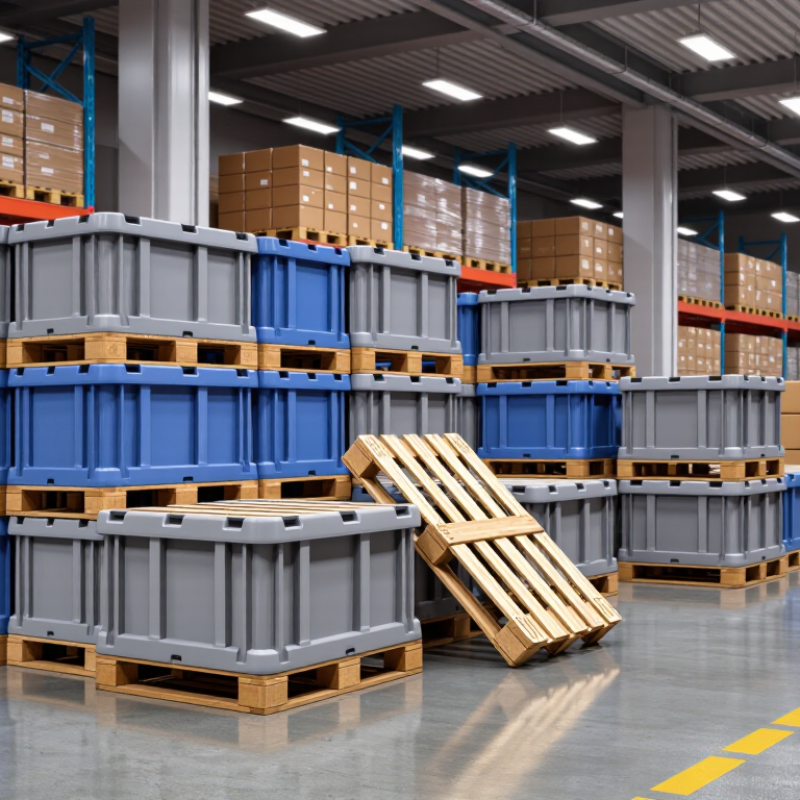
A pallet box lid is a fitted cover placed over a pallet-sized container. It may be a flat panel or a shaped lid that sits over the box walls. Common materials include plastic, wood, and corrugated board, chosen to suit the load and handling conditions. A lid helps keep dust, rain splash, and loose debris away from goods during storage or transport. It can also make stacked loads more stable when the lid and box are designed to work together. Not every lid is load-bearing, though. Check the supplier’s stated stacking limits before placing another box on top.
The right lid depends on what the box carries. A lid for clean, dry components may only need a snug fit, while products exposed to outdoor handling may need a more weather-resistant design. In warehouses, a fitted cover can reduce the chance of small parts spilling when a box is moved by forklift. Some lids use clips or straps; others simply rest on the rim. A loose fit can shift during handling, but a very tight one may slow access. Measure the box opening, consider how often workers need to reach inside, and confirm that the lid does not obstruct safe lifting. A simple cover. It sounds minor, yet the wrong size can cause avoidable delays.
China’s top pallet box lid suppliers are identified through evidence, not polished catalog photos. Start with product fit: check lid dimensions, edge design, stacking compatibility, and material thickness. Ask for drawings and a sample that matches the intended pallet box. Details matter. A lid that looks sturdy may still warp under repeated loading or fail to stay seated during handling.
Compare documented quality controls, production capacity, and inspection methods. Request measurement records, material specifications, and results from relevant load or impact tests. When possible, review a sample batch for uneven edges, weak corners, or inconsistent color. Also assess response times and whether technical staff can explain tolerances clearly. These signals help distinguish repeatable production from a one-off good sample. Not perfectly. Public information can be incomplete, and supplier rankings may rely on different criteria. Verify claims through direct questions, references, and a factory review where practical. Consider delivery performance and corrective-action procedures, too. A dependable supplier should discuss limitations openly, rather than promise that every lid suits every use.
A transparent supplier-screening framework for comparing pallet box lid manufacturers in China. The table ranks evaluation criteria—not named companies—because supplier-specific capabilities and performance should be verified directly rather than assumed.
| Rank | Evaluation dimension | Suggested weight | What to verify | Reliable evidence |
|---|---|---|---|---|
| 1 | Product and dimensional fit | 18% | Compatibility with the pallet box footprint, wall design, stacking method, and required lid geometry. | Dimensioned drawings, samples, and a documented fit check with the buyer’s container. |
| 2 | Material and application suitability | 15% | Material grade and performance appropriate to the intended load, temperature, environment, and reuse cycle. | Material specification, technical data, sample evaluation, and application-specific test results. |
| 3 | Manufacturing capability | 14% | Whether the supplier can produce the specified lid design consistently and meet the required order volume. | Production-process description, facility audit, equipment details, and a trial order. |
| 4 | Quality management and inspection | 13% | Documented incoming-material, in-process, and final inspection controls, with traceability for nonconforming products. | Quality procedures, inspection records, corrective-action examples, and independently verifiable certificates where applicable. |
| 5 | Load, stacking, and durability performance | 11% | Performance under the buyer’s specified stacking, handling, and service conditions; requirements vary by use case. | Test method, test conditions, results, and confirmation that the tested design matches the quoted product. |
| 6 | Customization and tooling support | 8% | Ability to assess custom dimensions, features, colors, or labeling, and to clarify tooling ownership and changes. | Written design review, tooling quotation, sample approval process, and agreed ownership terms. |
| 7 | Production lead time and delivery reliability | 7% | Realistic sample and production schedules, shipping preparation, and communication of delay risks. | Written lead-time commitments, order milestones, and delivery records that can be checked with references. |
| 8 | Export and packaging readiness | 5% | Ability to prepare export documentation and packaging suited to the agreed transport and destination requirements. | Sample shipping documents, packaging plan, and confirmation of the agreed Incoterms® rule. |
| 9 | Commercial transparency and total cost | 5% | Comparable quotations that clarify product price, tooling, packaging, minimum order quantity, and shipping assumptions. | Itemized quotation, payment terms, validity period, and written specification of included costs. |
| 10 | Communication and after-sales support | 4% | Clear technical responses, a defined contact point, and an agreed process for handling product issues. | Response during the quotation and sampling process, written warranty terms, and a corrective-action procedure. |
| Total suggested weighting | 100% | Use verified evidence to score shortlisted suppliers against the same requirements. | ||
How to use this framework: Request comparable quotations and samples, verify relevant records, and score each supplier against your application requirements. The weights are suggested purchasing criteria, not independently verified rankings or claims about specific Chinese suppliers.
China’s leading pallet box lid suppliers are best identified by capability, not by a fixed ranking. Look for manufacturers that produce lids matched to common pallet-box footprints, with reinforced edges, secure stacking features, and consistent dimensions.
A lid that rocks on a loaded box can cause problems during warehouse handling. Ask suppliers for material specifications, sample lids, and documented load or impact-test results. These details matter more than a polished catalogue.
Market growth offers useful context, though it does not rank individual factories. Grand View Research estimated the global returnable packaging market at about USD 113.6 billion in 2023 , reflecting demand for reusable transport solutions.
For buyers, this makes durability and repeat-order consistency important selection criteria. Compare production capacity, quality-control procedures, customization options, and export experience. Request measurements and test records for the exact lid design, not only general product claims. Even then, a sample cannot reveal every weakness; that part is easy to overlook.
Comparing China’s pallet box lid suppliers requires more than checking price lists. Product range matters: molded plastic lids suit repeated handling, while lighter designs can reduce empty-return weight. Buyers should inspect corner fit, stacking ribs, hinge or strap options, and whether lids remain secure after repeated forklift contact. Small details matter. A lid that rocks on a loaded box can slow packing and create avoidable damage.
Capability also means consistent production, material traceability, sample testing, and clear lead times. Fortune Business Insights estimated the global reusable packaging market at about US$113.7 billion in 2023, with projected growth to US$178.4 billion by 2032. That broad market figure is not specific to pallet box lids, but it signals rising demand for durable returnable systems. Ask suppliers for load-test results and dimensional tolerances, not just catalog claims. Check how they handle custom colors, replacement parts, and orders with mixed specifications. The best comparison is practical: test lids on the buyer’s actual boxes, then review fit after stacking and transport. This step is easy to overlook. I would also leave room for uncertainty: published capacity figures do not always show real delivery performance.
A practical sourcing scorecard: suggested evaluation weights for comparing suppliers, not verified performance data or a ranking of specific companies.
Use the same requirements and scoring method for every supplier. Verify material specifications, fit, load requirements, customization, lead times, and quality documentation directly with each supplier.
When comparing pallet box lid suppliers, start with fit, not price. Measure the box’s outer dimensions and check how the lid sits on its rim. Even a small mismatch can cause rocking, gaps, or trouble during stacking. Ask whether the supplier can provide a sample for a physical fit check.
Material choice should match the working environment. Lids used outdoors may need resistance to moisture and sunlight, while warehouse lids should tolerate repeated handling and contact with stacked loads. Ask for material specifications and test information, including how impact strength is assessed. Check hinge, clip, or locking details if the lid uses them. Small parts often show wear first. Do not assume a thicker lid is automatically stronger; design and material quality matter too.
Review production consistency, lead time, minimum order quantities, and customization options. Request clear drawings, written tolerances, and a realistic schedule before placing a large order. A supplier’s response to technical questions can reveal how carefully they understand the application. Compare the full landed cost, including packaging and freight, rather than the quoted unit price alone. Samples help. They do not prove every production batch will be identical, so ask how quality checks are recorded. Some details may still be overlooked. That is a reason to document requirements, not a reason to skip the supplier conversation.
Look for accurate dimensions, reinforced edges, and secure stacking features. Ask for material specifications and sample lids. Test records matter more than a polished catalogue. Some claims still need checking.
Not usually. A cheap lid may rock, crack, or fit poorly during handling. Compare the full landed cost, including packaging and freight. Price alone is incomplete.
Measure the box’s outer length, width, and rim. Place the sample lid on the actual box. Check for gaps, movement, and uneven corners. A small mismatch can cause trouble.
Molded plastic lids often suit repeated handling and stacking. The material should tolerate impacts, moisture, and contact with loaded boxes. Thicker does not always mean stronger. Design matters too.
Request load-test, impact-test, and dimensional-tolerance records. Ask whether testing covers the exact lid design. General documents may not reflect actual performance. That detail is easy to miss.
Check corner fit, stacking ribs, hinges, clips, and locking parts. Small components often wear first. Try repeated opening and closing. Real handling can reveal weaknesses.
They are important for repeat orders. Ask how dimensions, materials, and finished lids are inspected. Request written tolerances and inspection records. One good sample proves little.
Many suppliers may offer custom colors, dimensions, hinges, or straps. Confirm minimum order quantities and replacement-part availability. Request clear drawings before approval. Customization can create unexpected delays.
This article explains what a Pallet Box Lid is and how it helps protect stored goods, support stacking, and improve handling during storage and transport. It also describes the criteria used to identify leading suppliers in China, such as product range, manufacturing capacity, material quality, customization options, quality control, and customer support. Rather than relying on brand names, the overview focuses on supplier capabilities and the practical differences buyers may encounter.
When comparing suppliers, buyers should consider lid dimensions and compatibility with their pallet boxes, durability, expected load and handling conditions, production lead times, minimum order quantities, and communication throughout the purchasing process. Evaluating these factors alongside pricing and quality consistency can help businesses select a reliable supplier whose products meet their operational needs.

Huiyuan Plastic