Choosing a Sleeve Container for global shipping involves more than comparing prices. It requires practical judgment about products, routes, handling conditions, and destination requirements. A well-matched container can protect goods while controlling weight, storage space, and delivery costs. Small details matter. An extra five millimeters may affect pallet stability, warehouse fit, or carrier acceptance.
A Sleeve Container often combines a pallet base, a foldable sleeve, and a removable lid. This design supports efficient loading and return transport. It can suit automotive parts, industrial components, packaged food, and other approved commercial goods. However, suitability depends on the product’s size, weight, fragility, and moisture sensitivity. A heavy metal component needs different support from delicate electronic equipment. Corner protection, internal dividers, and ventilation may also influence performance.
Reliable selection starts with real shipping conditions. Consider ocean containers, truck loading, warehouse stacking, and repeated handling. Check the container’s working load, dimensions, folding method, and material quality. Ask suppliers for test records, cleaning procedures, and replacement-part availability. Confirm that the design aligns with carrier rules and import requirements in each destination market. These checks do not replace professional compliance advice, but they reduce avoidable delays.
No checklist is perfect. A container that performs well in a local warehouse may fail after vibration, humidity, or rough transfers. Trial shipments reveal weaknesses that product brochures often miss. Measure damage rates, loading time, empty-return volume, and customer feedback. Then adjust the design. The best choice is not always the strongest container. It is the Sleeve Container that reliably protects the product throughout its actual global journey.
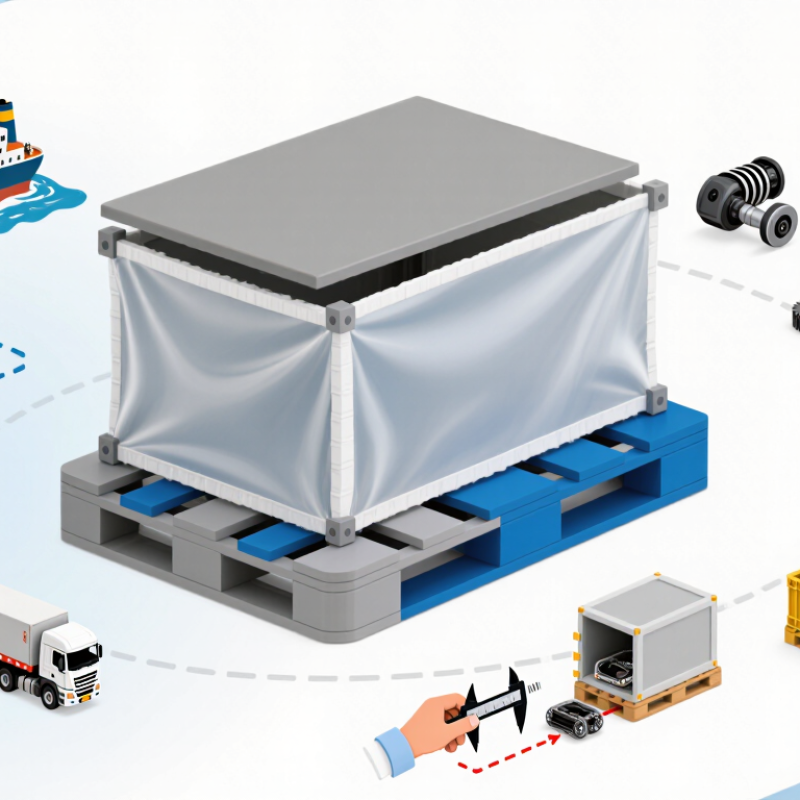
Define the Purpose and Requirements of a Sleeve Container
Choosing a sleeve container for global shipping begins with its intended purpose. Define what it must protect, carry, and withstand. A container for automotive parts has different needs from one holding delicate instruments. Note the product’s length, width, height, weight, and center of gravity. Include the packaging around each item.
Consider the shipping route and handling conditions. Ocean transport may expose cargo to humidity, salt air, vibration, and long storage periods. Air transport demands lower weight and secure closure. Check whether forklifts, pallet jacks, or automated systems will handle the container. Stacking strength also matters, especially when several units remain in warehouses. Use suitable materials, ventilation, and moisture protection. Confirm that the design supports local packaging rules and transport documentation. In practical testing, measure compression, impact resistance, and repeated assembly. A perfect first specification is unlikely. Small assumptions can create expensive failures.
Tips: Build a simple requirement sheet before requesting samples. Add a safety margin for weight and stacking pressure. Test the loaded container, not only the empty structure. Leave space for labels, inspection, and safe hand access. Ask operators to trial the container in real movements. Their feedback may expose awkward lifting points or weak closures. Recheck dimensions after production, because minor changes can affect pallet fit.
Evaluate Load Capacity, Dimensions, and Product Compatibility
How to Choose a Sleeve Container for Global Shipping?
A sleeve container should match the product, not merely the available warehouse space. Start with the total load, including the product, pallet, sleeve, and lid. Then check both static and dynamic capacity. Ocean handling, forklift movement, and uneven floors can create sudden stress. A container rated for 1,000 kilograms may perform poorly when the load is off-center. Keep a safety margin, especially for long routes and repeated handling.
Measure the product at its largest points. Include handles, protruding parts, protective film, and required ventilation gaps. Internal dimensions matter more than external measurements. Leave enough clearance for safe loading, but avoid excessive empty space. Too much movement can cause abrasion or impact damage. It happens more often than expected. I once approved a close fit that looked efficient, but unloading became slow and awkward.
Product compatibility also includes weight distribution, surface sensitivity, and environmental exposure. Heavy metal parts may need reinforced bases, while delicate equipment may require foam or separators. Check whether the sleeve resists moisture, temperature changes, and compression during stacking. Test a loaded unit before shipment. Move it, stack it, and inspect the product afterward. A container can pass a specification sheet and still fail in real handling. Review the design with warehouse staff and freight operators, because their practical feedback often reveals overlooked problems.
How to Choose a Sleeve Container for Global Shipping?
Evaluate load capacity, dimensions, and product compatibility
How to read this chart: The comparison uses common international pallet footprints and representative maximum gross-load ratings for reusable sleeve-container configurations. Select a footprint that matches the receiving market, confirm that the sleeve height protects the product, and keep the total shipment weight below the lowest-rated component.
Product compatibility: The 800 mm × 1,200 mm footprint is suitable for compact cartons and narrow aisle handling; the 1,000 mm × 1,200 mm footprint provides more space for larger products; square footprints can improve stability for evenly distributed loads. Actual capacity depends on pallet material, sleeve-board strength, stacking pattern, moisture, and transport conditions.
Compare Materials, Durability, and Protection Features
How to Choose a Sleeve Container for Global Shipping?
Material choice controls more than appearance. Corrugated fiber sleeves are lightweight, recyclable, and easy to customize. They suit dry routes and products with moderate impact sensitivity. However, humidity can soften their edges and reduce stacking strength. Molded pulp offers cushioning and a lower-plastic option, but it may need additional moisture protection. Plastic sleeves resist water and repeated handling, yet their environmental cost deserves careful review.
Durability depends on the entire journey. A sleeve should tolerate compression, vibration, drops, and uneven warehouse stacking. Check the wall thickness, seam strength, and fit around the product. A loose sleeve allows movement. A tight sleeve may transfer impact directly to the item. Small details matter. Corner reinforcement can prevent crushing. Soft inner pads can reduce scratches. A moisture barrier helps during sea transport, especially when cartons face condensation.
Protection testing should reflect real shipping conditions, not only a clean warehouse test. Use sample shipments when possible. Inspect crushed corners, shifted contents, and surface abrasion afterward. One useful design may still fail on a longer route. That is worth admitting. Cost, weight, recyclability, and protection often compete with each other. The best sleeve is not always the thickest one. It is the one matched to the product, route, climate, and handling risks.
Check Global Shipping, Handling, and Regulatory Requirements
How to Choose a Sleeve Container for Global Shipping?
Choosing a sleeve container starts with the shipping route, not the product alone. Check the destination climate, transport distance, and handling conditions. A sleeve should fit tightly without crushing the contents. Leave enough space for protective padding and movement control. Measure length, width, height, and loaded weight before ordering. Small errors can create large freight problems.
Review how the container will move through warehouses, ports, and delivery vehicles. Forklift contact, stacking pressure, vibration, and sudden rain can damage weak packaging. Use reinforced corners and moisture-resistant materials when the route requires them. A practical test includes stacking filled containers and checking them after repeated handling. No test is perfect. Real shipments can behave differently.
Regulatory checks deserve equal attention. Confirm size, weight, labeling, recycling marks, and material rules for every destination. If the sleeve uses wood, verify whether treatment and inspection documents are required. Printed information may need local language, product details, or importer data. Customs authorities can delay unclear or incomplete packaging. Do not assume one label works worldwide. Keep test records, material specifications, and supplier declarations together. I have seen teams focus on appearance while overlooking pallet height or label placement. That mistake can cause repacking, extra storage fees, or rejected delivery. Review the destination country’s current requirements before production, because regulations and carrier policies change.
Select a Cost-Effective Supplier and Validate the Container Design
Choosing a sleeve container for global shipping starts with the supplier, not the catalog photo. An experienced supplier should explain material grades, load limits, production tolerance, and export documentation clearly. Ask for recent test records and a physical sample before discussing large volumes. I have found that transparent communication often prevents expensive redesigns later.
Tips: Compare total cost, not only the unit price. Include tooling, sample fees, packing, freight, storage, and inspection costs. Request a written quotation with delivery terms and replacement procedures. A low quote can look attractive. It may hide weak board strength or inconsistent dimensions.
Validate the container design with the actual product inside. Check sleeve fit, corner protection, stacking stability, and access during unpacking. Test samples with vibration, compression, humidity exposure, and repeated handling. Measure deformation after each test. If the container travels through several climates, test those conditions too. Confirm that materials and labels meet destination requirements. Do not rely on one successful trial. I once accepted a design after a clean warehouse test, then noticed excessive movement during transport. That mistake showed me that realistic loading matters more than a perfect prototype. Keep the final drawings, inspection points, and approved sample together. This creates a reliable reference for every production batch.
How to Choose a Sleeve Container for Global Shipping? - Select a Cost-Effective Supplier and Validate the Container Design
| Sleeve Container Format |
Typical External Size
(L × W × H) |
Typical Internal Capacity |
Typical Tare Weight |
Typical Load Rating |
Folded Height |
Best Application |
| Small modular sleeve |
600 × 400 × 300 mm |
Approximately 55–65 L |
4–7 kg |
300–500 kg static |
80–120 mm |
Small components, samples, and mixed-SKU shipments |
| Half-pallet sleeve |
800 × 600 × 600 mm |
Approximately 220–260 L |
10–16 kg |
600–800 kg static |
100–150 mm |
Regional distribution and export consolidation |
| Euro-pallet sleeve |
1,200 × 800 × 800 mm |
Approximately 650–720 L |
18–28 kg |
800–1,000 kg static |
120–180 mm |
Standard palletized ocean and road freight |
| Industrial pallet sleeve |
1,200 × 1,000 × 1,000 mm |
Approximately 1,050–1,150 L |
24–38 kg |
1,000–1,200 kg static |
140–200 mm |
High-volume parts and dense industrial products |
Supplier Selection and Cost Validation Matrix
| Evaluation Dimension |
Recommended Benchmark |
Why It Matters for Global Shipping |
Validation Evidence to Request |
Cost Impact |
| Material and construction |
Recyclable corrugated plastic, polypropylene, or treated board selected for the cargo environment |
Controls moisture absorption, puncture risk, and container life |
Material specification, wall thickness, seam details, and water-resistance data |
Lightweight materials can reduce freight cost but may require stronger reinforcement |
| Pallet compatibility |
Base footprint aligned with 1,200 × 800 mm or 1,200 × 1,000 mm pallets |
Improves cube utilization and reduces overhang damage |
Dimensional drawing, pallet-fit test, and load distribution report |
Better fit can lower pallet count and handling charges |
| Stacking performance |
Static and dynamic ratings specified separately; safety factor documented |
Ocean vibration, braking, and uneven floors create loads beyond simple static stacking |
Compression test, stacking height limit, and safety-factor calculation |
Higher strength may increase purchase price but reduce product damage |
| Folded return efficiency |
Folded height generally targeted at 10–25% of assembled height |
Determines the cost of empty backhaul and return storage |
Folded-dimension drawing and return-load calculation |
Lower folded volume can materially reduce reverse-logistics cost |
| International compliance |
Wood-free construction preferred where possible; any wood components must meet destination requirements |
Untreated solid wood packaging may require ISPM 15 compliance and marking |
Material declaration, treatment certificate where applicable, and country-specific compliance statement |
Avoids inspection delays, treatment fees, and border-related storage charges |
| Reusable-cycle life |
Cycle target defined by application; 50–200 trips is a practical planning range for reusable designs |
A higher purchase price can be economical when the container replaces single-use packaging |
Repeated assembly, folding, compression, and handling test results |
Evaluate cost per trip rather than purchase price alone |
| Total landed cost |
Purchase price + freight + duties + handling + return logistics + loss and damage allowance |
The lowest unit price is not always the lowest global shipping cost |
Itemized quotation, packaging dimensions, shipping weight, and payment terms |
Use a cost-per-trip model for supplier comparison |
Planning note: Dimensions, capacities, load ratings, and cycle life are typical engineering ranges. Final values must be confirmed against the supplier’s approved drawing, cargo weight, pallet type, transport route, stacking height, climate exposure, and applicable import regulations.
FAQS
It should protect the product from impact, vibration, humidity, compression, and temperature changes. Protection depends on the cargo and route.
Measure the product at its largest points. Include handles, protruding parts, protective layers, and ventilation gaps.Internal dimensions matter most. Leave enough room for loading, but avoid excessive movement.
Calculate the product, pallet, sleeve, and lid together. Check both static and dynamic capacity.Add a safety margin. Off-center loads can create unexpected stress.
Heavy parts may require reinforced bases. Delicate equipment may need foam, separators, or corner protection.Moisture barriers can help during ocean transport. Ventilation may also be necessary.
Consider forklifts, pallet jacks, automated systems, uneven floors, stacking, and repeated handling.Ocean routes may involve salt air and long storage. Air transport may require lower weight and secure closure.
Test a loaded container, not only an empty structure. Check compression, impact resistance, vibration, humidity, and repeated assembly.Move it, stack it, and inspect the product afterward. One clean warehouse test may not be enough.
Request material grades, load limits, production tolerances, recent test records, and a physical sample.Ask for written delivery terms and replacement procedures. Clear answers matter more than a polished catalog image.
Compare the total cost, including tooling, samples, packing, freight, storage, and inspection.A low unit price may hide weak materials or inconsistent dimensions. I would check this twice.
Ask operators to trial loading, lifting, stacking, and unpacking. They may notice awkward hand access or weak closures.Practical feedback matters. Real movements reveal problems quickly.
Keep the final drawings, inspection points, test results, and approved sample together.Recheck dimensions after production. Small changes can affect pallet fit and stacking stability.
Conclusion
Choosing the right Sleeve Container is essential for protecting products and improving efficiency throughout global shipping. Start by defining its purpose, including the type of goods, handling conditions, storage environment, and expected shipping routes. Then evaluate load capacity, internal and external dimensions, stacking requirements, and product compatibility to ensure the container provides a secure fit without adding unnecessary space or weight. Material selection is also important, as strength, moisture resistance, cushioning, and reuse potential can affect both performance and operating costs.
Before making a decision, confirm that the Sleeve Container can withstand loading, unloading, warehouse storage, and long-distance transportation. Review packaging, labeling, documentation, and handling requirements for the intended destinations, while ensuring the design supports safe and compliant shipment practices. Finally, compare supplier pricing, production quality, customization options, delivery reliability, and after-sales support. Request samples or prototypes and validate the container through practical testing, such as stacking, vibration, compression, and environmental checks, before committing to large-scale use.

 Huiyuan Plastic