Essential Tips for Choosing the Right Rigid Pallet Box?

Time:2026-06-04 Author:Sienna
0%

Choosing the right Rigid Pallet Box is crucial for effective logistics and storage. This decision impacts efficiency, safety, and cost management in your operations. With various options available, making the right choice can feel overwhelming.

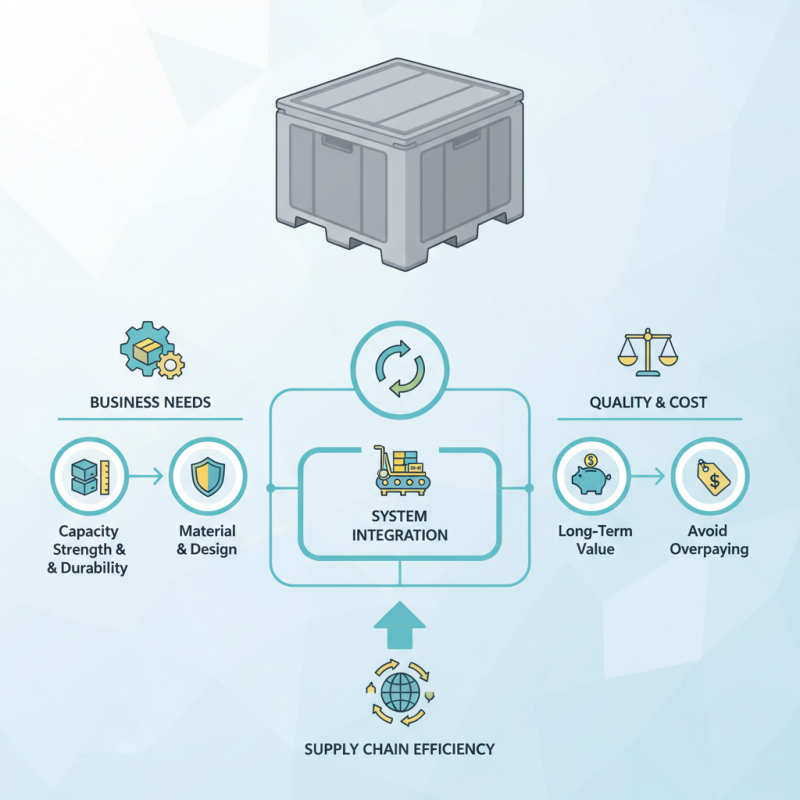
Consider the specific needs of your business. The capacity and design of the Rigid Pallet Box must align with the products you handle. Evaluate material strength and durability to protect your goods during transport. It's essential to assess how these boxes fit into your existing systems.

Balancing quality and cost is challenging. Investing in a reliable Rigid Pallet Box can save you money over time. However, be wary of overpaying for features you may not need. Reflect on your long-term goals and operational needs to find the best fit. Understanding these factors will help you choose wisely and enhance your supply chain efficiency.
Essential Tips for Choosing the Right Rigid Pallet Box?

Factors to Consider When Selecting a Rigid Pallet Box

When selecting a rigid pallet box, various factors play a crucial role. The first aspect to consider is the material. Rigid pallet boxes can be made from metals, plastics, or wood. Each material has its own strengths. For example, metal offers durability but may be heavy. Conversely, plastic is lighter but can be prone to wear.

Next, think about the size and capacity. The box should fit your products snugly. A box that is too large may allow items to shift during transport, leading to damage. It's important to measure your goods accurately. Double-check dimensions for a perfect fit.

Finally, consider the intended use. Will the box be for storage or shipping? The design should align with its purpose. Some boxes are stackable; others are not. This choice will affect your storage efficiency. Take time to weigh these decisions carefully. A misinformed choice can lead to costly mistakes. Always look for options that fit your operational needs best.

Materials Used in Rigid Pallet Box Construction

When choosing a rigid pallet box, the materials used in its construction are crucial. Common materials include high-density polyethylene (HDPE), cardboard, and metal. HDPE offers durability and resistance to harsh chemicals. It is lightweight yet strong, making it ideal for various shipments. Cardboard, while not as robust, provides a cost-effective solution for lighter loads. However, it may lack the resilience of other materials.

Metal is often favored for heavy-duty applications. It withstands the rigors of transportation better than its peers. Yet, metal boxes can be prone to rust if not treated properly. This requires consideration in environments where moisture is present. Reflecting on these options helps in making informed choices.

Consider the intended use when selecting materials. Each material has implications for weight, cost, and durability. A heavier box might offer better protection but could increase shipping costs. Balancing these factors is essential. Awareness of trade-offs leads to smarter decisions in logistics. Always evaluate the specific needs before committing to a material choice.

Understanding Size and Dimensions for Pallet Box Usage

When selecting a rigid pallet box, the size and dimensions play a crucial role in efficient storage and transport. A recent report by the Packaging Institute states that approximately 30% of transport costs stem from improper packaging. Thus, choosing the correct dimensions can optimize space and reduce costs effectively.

Consider the height and width of your pallet box. A standard dimension is often 48"x40". However, variations exist. For instance, a box that is too tall may stack poorly, leading to instability. Conversely, one that is too small could fail to accommodate your product, resulting in damaged goods. It’s essential to measure your products accurately to avoid these pitfalls.

Tip: Always weigh and measure your products before making a decision. Buyers often overlook the weight capacity and dimensions. The maximum loading weight usually ranges from 1,000 to 2,500 pounds for most durable boxes. This knowledge will help you avoid the frustration of inadequate space.

Another aspect to consider is compatibility with your transport methods. Are you using forklifts or conveyor belts? Each method requires specific dimensions for efficiency. Neglecting this could lead to costly delays.

Tip: Engage your logistics team in the decision-making process. Their insights on operational needs can enhance your choice, ensuring it meets real-world challenges.

Essential Tips for Choosing the Right Rigid Pallet Box? - Understanding Size and Dimensions for Pallet Box Usage

Dimension Type Measurement (inches) Usage Scenario
Length 48 Standard for pallets in the US
Width 40 Common width for compatibility
Height 36 Ideal for stacking and storage
Weight Capacity 2000 Maximum load for safety
Material Thickness 1/2 Optimum durability for transport
Internal Volume 70 Cubic feet for item storage

Evaluating Durability and Load Capacity Requirements

When selecting a rigid pallet box, evaluating durability is crucial. Look for materials that can withstand harsh conditions. Options like high-density polyethylene (HDPE) and plywood may offer different levels of resistance. These materials should endure moisture, chemical exposure, and rough handling without compromise. However, always consider your specific use case. Not all materials are suitable for every environment.

Load capacity is equally important. Assess the weight of your products and any regulatory standards. Choose a box that can handle your maximum load with ease. Overestimating can lead to structural failures. Underestimating may cause damage to your goods. It’s a fine balance.

Perform tests, if possible, to ensure the box meets your needs under real-world conditions. Be ready to adapt if you find your chosen box isn't performing as expected. This approach can significantly impact your logistics.

Cost Considerations and Budgeting for Rigid Pallet Boxes

When budgeting for rigid pallet boxes, understanding the initial cost is crucial. Prices can vary based on materials and specifications. A sturdy design often costs more but usually lasts longer. Investing in high-quality materials may save you money over time due to fewer replacements. Pay attention to the long-term value, not just the upfront expense.

Hidden costs can arise from transportation and storage. Sometimes, larger boxes take more space, increasing storage costs. Consider your supply chain efficiency. Extra expenses in logistics can offset the savings from a low-priced option. Evaluate the total cost of ownership, including maintenance and service life.

Finally, reflect on your specific needs. Are you shipping fragile items? Then you might need a more robust box, increasing costs. Conversely, lightweight products may allow you to save. Balancing budget constraints with operational needs is key. Evaluate every option carefully, as the wrong decision can impact your entire logistics process.

Cost Considerations for Rigid Pallet Boxes

This bar chart illustrates the various cost components associated with rigid pallet boxes, including material, manufacturing, transport, storage, and maintenance costs. Understanding these costs can help businesses budget effectively when selecting rigid pallet boxes.

FAQS

: What materials are commonly used in rigid pallet box construction?

: High-density polyethylene (HDPE), cardboard, and metal are common materials.

How does HDPE compare to other materials?

HDPE is durable, lightweight, and resistant to harsh chemicals, ideal for various shipments.

Why might cardboard not be a good choice for all products?

Cardboard is cost-effective but lacks the strength and resilience of other materials.

What should you consider when choosing box size?

The size affects storage efficiency and transport costs; measuring products accurately is essential.

What is a standard dimension for a pallet box?

A common size is 48"x40", but variations exist to fit specific needs.

How important is load capacity when selecting a box?

Load capacity is crucial; overestimating or underestimating can cause structural failures or damage.

Should I consult my logistics team before making a decision?

Yes, their insights can help ensure your choice addresses real-world operational challenges.

What happens if a box is too tall or too small?

A tall box may stack poorly, while a small one might not fit products, risking damage.

How can materials affect a box's durability?

Some materials resist moisture and chemicals better, which is vital for harsh conditions.

What should I do if a chosen box isn't performing as expected?

Be ready to adapt your choice based on performance tests in real-world conditions.

Conclusion

When choosing the right Rigid Pallet Box, several factors should be taken into account to ensure optimal performance and efficiency. Key considerations include the materials used in construction, which can affect both the durability and overall weight of the box. It's essential to understand the size and dimensions that fit your specific usage requirements, ensuring that the box meets your load capacity needs without compromising on strength.

Evaluating the durability and load capacity is crucial, as these factors determine how well the Rigid Pallet Box will withstand various handling and storage conditions. Additionally, budgeting is an important aspect; it's vital to weigh the cost against the benefits of higher-quality materials that may provide better longevity and performance in the long run. By carefully assessing these elements, you can select a Rigid Pallet Box that best suits your operational needs.


Sienna

Sienna

Sienna is a skilled marketing professional with a deep expertise in our company’s core products and services. With a passion for innovation and detail, she plays a pivotal role in crafting insightful blog posts that not only highlight the unique features of our offerings but also provide valuable......