China’s pallet packaging sector serves manufacturers, warehouses, and exporters across many industries. Buyers seeking reliable Pallet Boxes face a crowded supplier market. Products may look similar online, yet differences in material thickness, welds, corner design, and handling features can affect service life. Details matter.
This guide introduces ten pallet box manufacturers in China and outlines what buyers should examine when comparing them. The profiles consider product range, customization options, production capabilities, quality checks, and export experience. They also highlight practical questions: Are dimensions and load ratings clearly documented? Can the supplier provide samples or inspection records? Do folding models suit your storage space and return logistics? A polished catalog rarely answers everything.
The right choice depends on the goods, warehouse layout, handling equipment, and expected use cycle. A heavy-duty box may be unnecessary for lightweight products, while a low purchase price can become costly if repairs are frequent. That takes checking. No ranking can replace reviewing specifications and confirming requirements directly with a manufacturer. Some details may remain unclear until a buyer requests drawings, sample units, or a factory discussion. That is worth acknowledging. Use the ten-company overview as a starting point, not a guarantee that one supplier fits every operation.
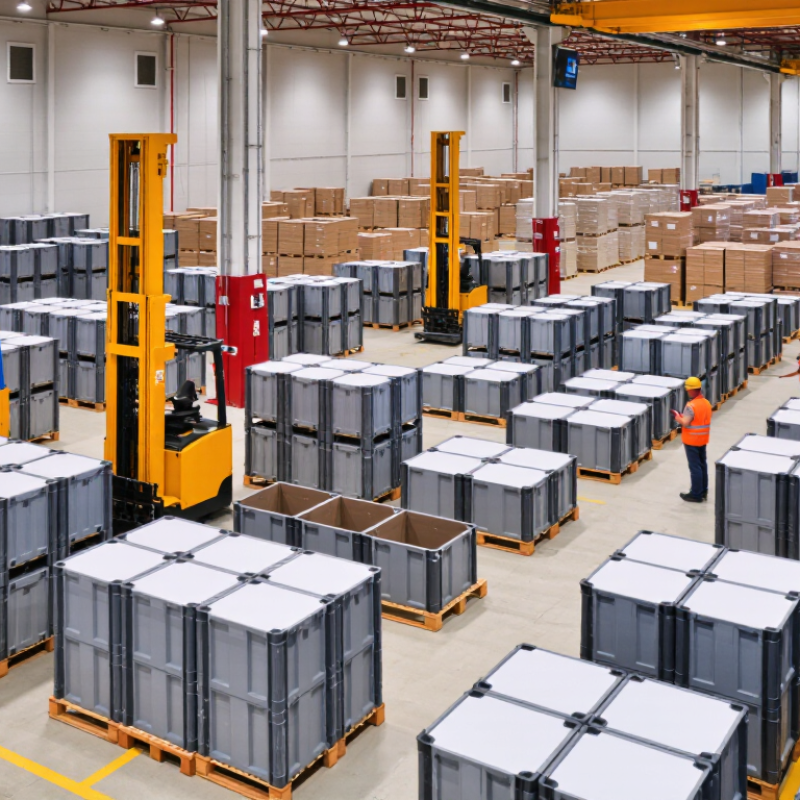
Understanding Pallet Boxes and Their Role in Industry
A pallet box is a large container designed to hold goods while moving on a pallet. It can replace many small cartons, helping keep loose parts together during storage and transport. Solid walls protect loads from bumps and dust; open-sided designs make contents easier to inspect. The choice depends on the goods, handling equipment, and whether the container will return for reuse. Small details matter: a fork opening that sits too low can slow a busy shift.
Grand View Research estimated the global reusable packaging market at USD 112.4 billion in 2022 and projected a 5.3% compound annual growth rate from 2023 to 2030. This broad market estimate is not specific to pallet boxes, but it shows the scale of interest in returnable packaging. In practice, box dimensions, safe load limits, empty-stack height, and cleaning needs affect daily performance. A box that stacks neatly when full may waste space on the return trip. Not always obvious. Teams should test containers with actual loads and handling routines before ordering at scale; paper specifications rarely reveal every snag.
How to Evaluate Pallet Box Manufacturers in China
When evaluating pallet box manufacturers in China, begin with the job the box must do. Confirm external and internal dimensions, payload, stacking height, and whether boxes will travel by forklift or conveyor. Ask for static and dynamic load figures, then check how those figures were tested. A catalogue number alone is not enough. Request a sample and inspect its corners, base, drainage points, and molding consistency.
Material and production control matter. Ask whether the manufacturer uses virgin or recycled resin, and how material batches are tracked. For outdoor storage, discuss UV resistance and temperature exposure. Review inspection records for wall thickness, dimensions, and load testing. If possible, watch a production run or have an independent inspector check a sample. Small defects can become costly at scale.
Check service details too: tooling ownership, replacement-part availability, packaging, lead times, and how complaints are handled. Request references from buyers with similar applications, not just general testimonials. Compare quotations item by item, including freight assumptions and sample costs. One caveat: a neat factory visit does not guarantee every batch will match. I would still ask for written specifications and agree on acceptance checks before placing a large order. Good communication helps, but it is not proof of quality.
Profiles of the Top 10 Pallet Box Manufacturers in China
Profiles of the Top 10 Pallet Box Manufacturers in China
China’s pallet box sector includes manufacturers with different strengths, rather than one universal best choice. Some specialize in molded plastic boxes for repeated warehouse use. Others produce foldable containers that save space on return trips. Heavy-duty makers focus on reinforced bases and thick corner posts. Export-oriented factories may offer custom dimensions, while agricultural suppliers often design ventilated sides for produce. Several manufacturers serve automotive and machinery operations with stackable, high-load models. Others prioritize lightweight boxes for distribution centers. A few provide integrated lids and access doors. Smaller producers may respond quickly to custom requests, though their testing records can be less consistent. Large factories often have broader quality-control systems, but minimum order quantities may be higher. These are useful manufacturer profiles, not a verified ranking.
Tips: Ask for a sample and confirm its internal dimensions, safe working load, and stacking limit. Check whether load figures apply to static storage or movement. Request photos of the base, welds, and drainage openings. Details matter.
Before choosing a supplier, compare material specifications and written inspection procedures. A box can look sturdy on a clean showroom floor, yet flex under uneven loads. That difference is easy to miss. Review how the supplier handles replacement parts and repeat orders, too. One practical test is loading the sample with your actual goods and moving it across the warehouse floor. Small trials reveal issues that brochures often do not.
Comparing Products, Materials, and Customization Options
When comparing the top ten pallet box manufacturers in China, look beyond catalog photos. Their ranges may include rigid, collapsible, ventilated, and sleeve-style boxes. Each suits different handling needs. A solid-wall box can protect small parts from dust, while ventilation helps when airflow matters. Collapsible designs save warehouse space on return trips. Details matter.
Material affects weight, impact resistance, cleaning, and service life. Common choices include HDPE, polypropylene, and corrugated plastic; some designs add metal reinforcement. Ask for dimensions, empty weight, and rated load, then check whether figures cover stacking or movement. A sample loaded with your actual goods can reveal awkward access or flexing. Not always. A neat specification sheet cannot show every problem.
Customization may include internal dividers, access doors, lids, labels, colors, and nonstandard footprints. Match these options to your pallet, shelving, and handling equipment before requesting a quote. Clarify minimum order quantities, tooling charges, sample lead times, and replacement-part availability. I would be cautious about choosing by price alone, but the most customized box is not automatically the best one. Compare the features you will use with the cost and inspection evidence provided.
Pallet Box Materials: Typical Material Density
When comparing pallet box products and customization options, material choice affects weight and design. This chart shows approximate raw-material density—not finished box weight or manufacturer rankings. Actual values vary by grade, construction, and wood species.
Typical approximate densities: polypropylene (PP) 0.90–0.91 g/cm³; high-density polyethylene (HDPE) 0.94–0.97 g/cm³; plywood about 0.40–0.70 g/cm³; carbon steel about 7.85 g/cm³. Values are representative reference ranges, not product specifications.
Factors to Consider When Choosing a Manufacturer
For pallet box buyers, a low quote can hide costly weaknesses. Compare load capacity, material grade, wall thickness, and base design against your actual goods. A box holding dense metal parts needs a different floor structure than one carrying light packaging. Ask for rated static and dynamic loads, not just a single capacity figure. Check dimensions against your pallets, racking, and forklift entry points. Small mismatches matter.
Evaluate production consistency, not only a polished sample. Request inspection records, material specifications, and clear answers about recycled content and temperature limits. If possible, review a sample after stacking or handling it in conditions close to your operation. Confirm lead times, replacement-part availability, export packing, and defect procedures. A factory visit can help, though one visit cannot prove every batch will match. That uncertainty deserves attention.
Tips: Send a simple drawing and photos of your current load. Ask the supplier to state assumptions in writing. Test one unit before placing a large order. Leave room for error; real warehouses are rarely as tidy as plans. A reliable manufacturer should welcome specific questions about failure rates and delivery delays.
FAQS
It holds goods on a pallet during storage and transport. Solid walls help protect items from dust and bumps.
Solid walls suit goods needing more protection. Open sides make contents easier to inspect. Neither design fits every load.
Check internal and external dimensions, payload, stacking height, and fork openings. A low opening can slow forklift work.
Ask for static and dynamic load ratings, plus details about how they were tested. One capacity figure may not tell the whole story.
Look at the corners, base, drainage points, wall thickness, and molding. Small flaws matter.
Request material specifications and inspection records. If possible, inspect a sample after stacking or handling it under realistic conditions.
Confirm lead times, replacement parts, tooling ownership, export packing, and defect procedures. Get key assumptions in writing.
Send a simple drawing and photos of your load. Test one unit first. Real warehouses are rarely as tidy as plans.
No. It can offer useful information, but one visit cannot guarantee consistency. I would still agree on acceptance checks before ordering.
Conclusion
This article explains the role of Pallet Boxes in modern industry, where they support the storage, handling, and transport of goods across warehouses and supply chains. It outlines key criteria for evaluating manufacturers in China, including production capabilities, product quality, material options, customization services, and experience serving different industries. The article also presents an overview of ten manufacturers, focusing on the kinds of solutions they offer rather than relying on brand names.
Readers can compare Pallet Boxes by construction, size, load capacity, durability, and suitability for specific operating conditions. The discussion highlights how material choices and design features may affect reuse, maintenance, and compatibility with existing equipment. Finally, it offers practical considerations for selecting a manufacturer, such as clear specifications, consistent quality control, responsive communication, and the ability to meet delivery and customization needs. Together, these points help buyers make a more informed choice for their storage and logistics requirements.

 Huiyuan Plastic