What Are the Top Plastic Folding Pallets in 2026?

Time:2026-09-29 Author:Henry
0%

Plastic Folding Pallets are gaining attention as warehouses seek durable loads and more efficient return trips. Their hinged decks or collapsible sides can reduce empty-pallet storage space. Yet “top” does not mean the same thing for every operation. A grocery distributor, an export shipper, and an automated warehouse may need very different features.

This guide compares leading options for 2026 through practical criteria: static and dynamic load ratings, folded height, tare weight, deck design, and compatibility with pallet jacks or conveyors. It also considers material quality, repairability, hygiene needs, and the clarity of manufacturer specifications. Small details matter. A pallet that folds neatly on a showroom floor may be awkward when workers wear gloves or handle it in a crowded trailer. We will look for evidence in product data and real operating requirements, rather than rely on broad claims or appearance alone.

There is no universal winner. Some models prioritize high load capacity, while others focus on low weight or compact return logistics. Ratings can also depend on load distribution, handling conditions, and whether the pallet is used dynamically or stored statically. Those distinctions are easy to overlook. We will flag them where available, while recognizing that published figures do not replace a site trial. The goal is a useful shortlist, not a perfect verdict: compare the specifications with your own goods, equipment, and workflow before making a purchase decision.
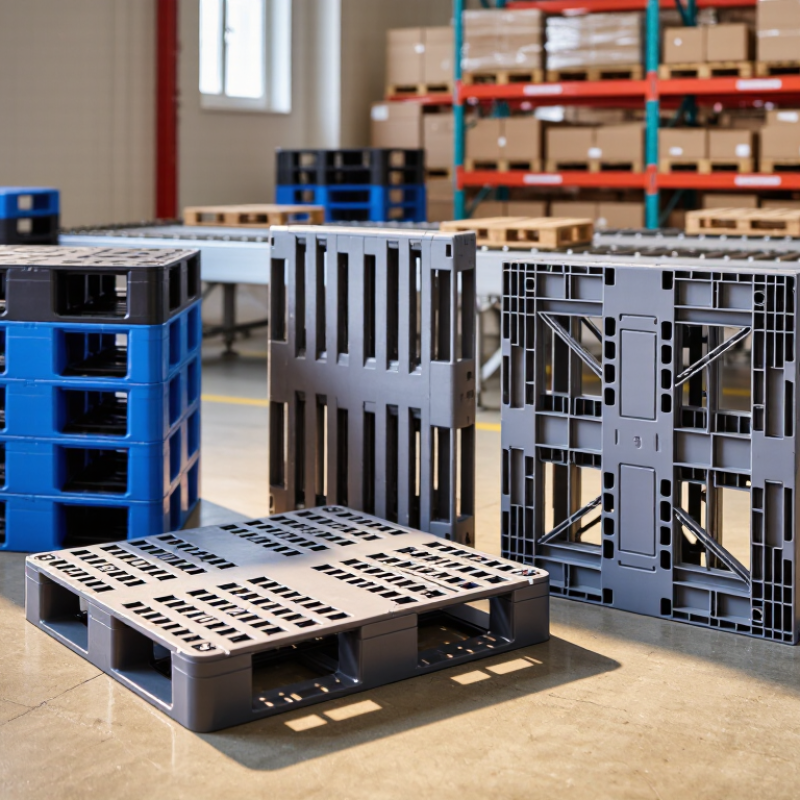
What Are the Top Plastic Folding Pallets in 2026?

What Defines a Plastic Folding Pallet?

What Defines a Plastic Folding Pallet?

A plastic folding pallet is a reusable load platform with hinged or collapsible components. It folds after unloading, reducing empty-return volume in warehouses and trucks. Its core parts include a rigid deck, load-bearing legs, locking points, and stable stacking surfaces. Some models fold inward. Others collapse through removable or flexible supports.

The word “folding” can mislead. A pallet that merely nests is not always a folding pallet. True folding designs must reduce height while remaining secure during handling. They should also resist impact, moisture, splinters, and repeated cleaning. ISO 6780 provides dimensional guidance, while ISO 8611 supports performance testing for pallet loads. These standards help, but real warehouse trials still matter.

Market demand reflects this practical value. MarketsandMarkets reported that the global plastic pallet market could grow from about USD 7.1 billion in 2023 to USD 10.2 billion by 2028. The report links growth to reusable transport systems and supply-chain efficiency. However, lower return volume does not guarantee lower total cost. Hinges can wear. Locks can loosen. Folding pallets need inspection records, rated load data, and testing on actual conveyor systems. A design may look efficient on paper and still perform poorly under uneven loads. That uncomfortable gap deserves attention.

How Plastic Folding Pallets Are Designed and Classified

What Are the Top Plastic Folding Pallets in 2026?

Plastic folding pallets are designed around one practical question: what happens after delivery? Their hinged legs or collapsible walls reduce return volume, while reinforced decks support repeated handling. The best designs usually combine high-density polyethylene or polypropylene with rounded corners, drainage openings, and replaceable components. Small details matter. A damaged hinge can stop a whole load.

Classification begins with structure and load performance. Nestable pallets save space when empty, while stackable models use fixed feet or runners for loaded storage. Rackable pallets require stronger reinforcement and controlled deflection. Buyers should separate static, dynamic, and racking loads instead of trusting one headline capacity.

ISO 8611 testing covers these load conditions, but field performance also depends on temperature, forklifts, and uneven floors. That part is often underestimated.

Common footprints include 1200 × 800 mm and 1200 × 1000 mm, matching widely used European and industrial handling systems. The 2024 MHI Annual Industry Report identifies supply-chain resilience and reusable transport systems as continuing priorities. Smithers’ 2024 analysis also reports sustained growth in reusable plastic packaging, supported by closed-loop logistics. These findings support folding pallet adoption, but they do not prove that every collapsible design is economical. A lighter pallet may reduce freight weight yet fail sooner under harsh racking conditions. Real users should record cycle counts, repairs, nesting ratios, and cleaning time. The data may reveal an uncomfortable answer: the cheapest pallet is not always the lowest-cost pallet.

Which Materials and Load Ratings Matter Most?

In 2026, the best folding pallets will not be chosen by appearance alone. Material selection affects strength, weight, hygiene, and service life. High-density polyethylene offers strong impact resistance and performs reliably in damp warehouses. Polypropylene is lighter and stiffer, but it may become less forgiving under severe cold or repeated impacts. Recycled plastic can reduce material waste, although its consistency requires careful quality control. I have seen small variations in molding create noticeable differences between pallets.

Load ratings also need close inspection. Static capacity describes a motionless load on a flat surface. Dynamic capacity covers movement with a forklift or pallet truck. Racking capacity applies to supported storage conditions and is often much lower. These numbers are not interchangeable. A pallet rated for 1,000 kilograms dynamically may support far less when placed across wide rack beams. Temperature, load distribution, and handling speed can change the real result. Details matter.

A dependable evaluation should match the pallet to its daily workload. Measure the actual carton footprint, inspect fork-entry points, and check how securely folded units lock. Test stacked pallets with uneven loads, not only perfectly balanced boxes. Hinges deserve attention because they receive repeated stress during folding. One weakness remains easy to overlook: published ratings may come from controlled tests rather than busy warehouses. Practical trials are essential. Testing is less glamorous. Yet it reveals warping, slipping, and difficult handling before those problems interrupt operations.

How to Compare the Top Plastic Folding Pallets in 2026

When comparing the top plastic folding pallets in 2026, start with the load, not the brochure. Check both static and dynamic capacity, then confirm whether figures assume an evenly distributed load. A stack of boxed parts behaves differently from a single heavy machine component. Measure the folded pallet, too; a compact return size can reduce trailer space, but only if workers can fold it quickly and safely. Small details matter.

Next, compare deck design, entry points, tare weight, and repair options against your actual handling system. ISO 6780 defines six standard pallet footprint dimensions, including 1,200 × 1,000 mm and 1,200 × 800 mm. These are useful compatibility checks, not proof that a pallet suits every conveyor or rack. MHI’s 2024 Annual Industry Report found that 88% of surveyed supply-chain professionals expected to adopt or increase use of supply-chain technology. That trend makes tracking features worth assessing, but tags add little value if scans fail in daily operations. Test a sample under real loads. Listen for rattling. Inspect hinges after repeated folding. I would also compare cleaning time and replacement parts; these are easy to overlook during purchasing. Specifications help. Field trials matter more.

What Are the Top Plastic Folding Pallets in 2026? — How to Compare the Top Plastic Folding Pallets in 2026

Pallet Type Typical Construction Common Footprint Best-Suited Use Key Advantages Points to Check Before Buying
Light-duty folding pallet Usually molded polypropylene or polyethylene; often designed for lighter, repeat-use loads. Common formats include 1200 × 800 mm and 1200 × 1000 mm. Closed-loop distribution, retail logistics, and light warehouse handling. Folds for return transport and storage; reusable construction can reduce reliance on one-way pallets. Confirm rated dynamic and static capacities, deck support, and compatibility with the intended conveyor or handling equipment.
Heavy-duty folding pallet Reinforced plastic construction, sometimes with internal or insert reinforcement. Often offered in common regional footprints, including 1200 × 1000 mm and 48 × 40 in. Repeated industrial or distribution-center trips where a collapsible design is also required. Combines return-trip space savings with a design intended for more demanding handling than light-duty models. Compare load ratings under static, dynamic, and rack-supported conditions; these ratings are not interchangeable.
Hygienic folding pallet Plastic deck and base designed for cleanability; some designs use fewer exposed crevices. Footprint depends on the handling system; 1200 × 800 mm and 1200 × 1000 mm are widely used formats. Food, pharmaceutical, and other operations with defined cleaning or contamination-control procedures. Non-porous plastic surfaces are generally easier to wash than absorbent wood surfaces. Check cleaning instructions, drainage, temperature limits, chemical compatibility, and any required regulatory documentation.
Export-oriented folding pallet Lightweight molded plastic design, commonly selected for one-way or limited-cycle export movements. Available in several footprints; select to match the shipment, container, and destination handling system. Export shipments where low tare weight and reduced empty-return volume are priorities. Folding can reduce the space occupied by empty pallets during return or storage. Check destination requirements, shipment load, pallet entry direction, and whether the pallet is suitable for the required trip count.
Collapsible pallet box Foldable plastic pallet base with collapsible side walls; may include a lid. External dimensions vary by system; compare them with the required usable internal volume. Bulk components, parts, and products that need containment during storage or transport. Provides more protection and containment than a flat pallet while folding down when empty. Assess wall strength, lid fit, usable volume, access openings, cleaning needs, and stacking stability when loaded.

Comparison note: There is no single best folding pallet for every operation. Dimensions and load capacities vary by design and supplier. Verify the product’s published static, dynamic, and racking ratings, folded height, tare weight, material, and compatibility with your equipment before purchase. A 48 × 40 in footprint is commonly used in North America; 1200 × 800 mm and 1200 × 1000 mm footprints are common in many other markets.

Where Plastic Folding Pallets Are Used and Maintained

Plastic folding pallets are useful where empty packaging must take up little space. In warehouses, shops, and distribution centers, workers can fold them flat between deliveries. They also suit return loops, where pallets travel back to a supplier after goods are unloaded. A folded stack beside a loading bay can leave more room for carts and foot traffic.

They are not ideal for every job. Check the pallet’s rated capacity and confirm it suits the load, handling equipment, and floor conditions. A pallet that works well for cartons may not support an uneven machine part safely. Small details matter. Before use, inspect hinges, locking points, and deck surfaces for cracks, distortion, or trapped debris. Make sure the pallet is fully opened and locked before loading. Keep loads centered, and avoid dragging a loaded pallet across rough ground.

Cleaning and storage help extend service life. Remove dirt from hinge areas with a brush, then wash with a mild cleaning solution when needed. Let the pallet dry before folding and stacking it; moisture or leftover residue can be easy to overlook. Store stacks on a level surface, away from sharp edges and excessive heat. Record repeated damage so maintenance teams can spot patterns. Still, inspections cannot prevent every failure, and a damaged pallet should be taken out of service rather than patched casually.

What Are the Top Plastic Folding Pallets in 2026?

Where Plastic Folding Pallets Are Used and Maintained

Typical static load capacity by common pallet footprint: Larger footprints generally support higher static loads, while actual capacity depends on pallet design, material, load distribution, stacking height, and handling conditions.

FAQS

What is a plastic folding pallet designed to do?

It supports goods during handling and folds after delivery. The folded shape reduces return volume. Small hinges matter.

How do nestable and stackable pallets differ?

Nestable pallets fit inside one another when empty. Stackable pallets use fixed feet or runners for loaded storage. The choice depends on warehouse space.

What load ratings should buyers compare?

Compare static, dynamic, and racking loads separately. Static capacity covers stored goods. Dynamic capacity covers movement. Racking capacity concerns supported storage positions.

Why can one capacity figure be misleading?

A capacity figure may assume an even load on a level floor. A heavy machine part creates different stress. Real conditions are messier.

Which pallet sizes are commonly used?

Common footprints include 1,200 × 800 millimeters and 1,200 × 1,000 millimeters. Check conveyors, racks, forklifts, and storage lanes before ordering. A standard size is not universal.

What design details deserve close inspection?

Inspect hinges, rounded corners, drainage openings, deck strength, and entry points. Look for replaceable components. A damaged hinge can stop one full load.

How should folding pallets be tested before purchase?

Test a sample with real loads and actual handling equipment. Fold it repeatedly. Listen for rattling and inspect hinge wear. The brochure cannot reveal everything.

Can a lighter pallet reduce total logistics costs?

It may reduce freight weight and folded return space. However, it might fail sooner in demanding racks. Track repairs, cleaning time, cycle counts, and nesting ratios. The cheapest option may not be cheapest overall.

Are tracking features always useful?

Tracking can improve visibility in reusable transport systems. It adds little value when workers miss scans. Test daily scanning reliability before paying for extra features. Sometimes simpler works better.

Conclusion

Plastic Folding Pallets are reusable load platforms designed to fold when empty, helping businesses save storage space and reduce return-transport costs. Their structure typically combines a durable plastic base with folding legs or hinged supports, and designs may differ by entry style, deck surface, dimensions, and stacking method. When evaluating them, users should consider material quality, resistance to impact, moisture, chemicals, and temperature changes, as well as static, dynamic, and racking load ratings. A pallet that performs well in one application may not be suitable for another, so load conditions and handling equipment must be reviewed carefully.

The top Plastic Folding Pallets in 2026 should be compared through practical factors such as folded volume, weight, durability, safety features, cleanliness, repairability, and total operating cost. They can support warehouse storage, distribution, export logistics, retail supply chains, and other routine material-handling operations. Regular inspection, proper loading, cleaning, and correct folding and unfolding procedures help extend service life and maintain stable performance.


Henry

Henry

Henry is a dedicated marketing professional with a profound expertise in the company's offerings. With years of experience in the industry, he possesses an impressive understanding of the market dynamics and consumer behaviors that drive success. Henry is committed to sharing his insights through......